Introduction
Lady Hardinge Medical College, widely known as LHMC, is one of India’s oldest and most respected medical institutions. Located in New Delhi, the college has a distinctive place in Indian medical education because it was established to expand medical training opportunities for women at a time when access to professional education for Indian women was extremely limited.
Founded in the early twentieth century, LHMC has grown from a women-focused medical college into a major central government medical institution with associated teaching hospitals, postgraduate training, research activity, and tertiary-level healthcare services. The institution continues to be known for its academic legacy, clinical training environment, and contribution to public healthcare in the national capital.
History and Foundation
Lady Hardinge Medical College was founded in 1914 to commemorate the visit of Queen Mary to India in 1911–12. The idea for the college was strongly associated with Lady Hardinge, wife of the then Viceroy of India, who took the initiative to support a separate medical college for women because the lack of such an institution made it difficult for Indian women to study medicine.
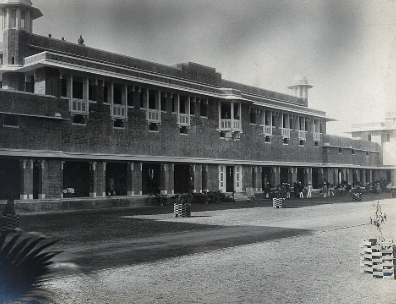
The foundation stone of the college was laid by Lady Hardinge on 17 March 1914. After her death, the college and hospital were named in her memory. The institution was formally inaugurated in 1916 by Lord Hardinge. It began on a modest scale, but its founding marked an important step in the history of women’s medical education in India.
Over time, LHMC became part of the wider structure of medical education in Delhi. The college is affiliated with the University of Delhi and functions as a central government medical institution under the Ministry of Health and Family Welfare, Government of India.
Academic Excellence:
Lady Hardinge Medical College offers medical education and training across undergraduate, postgraduate, and super-specialty levels. It is especially known for its MBBS programme, which has historically been associated with women’s medical education. According to PrepMed, LHMC remains exclusively for women at the undergraduate level, while postgraduate and super-specialty programmes are open to both male and female candidates.
The college is affiliated with the University of Delhi and is recognised within India’s medical education framework. Its academic environment is supported by experienced faculty, clinical departments, hospital-based training, and exposure to a large patient population in Delhi.
LHMC’s mission includes providing state-of-the-art medical education and training, conducting research on important medical and public health issues, and supporting national health policies and programmes.
Healthcare and Clinical Services
Healthcare delivery is central to the identity of Lady Hardinge Medical College. The institution is associated with Smt. Sucheta Kriplani Hospital and Kalawati Saran Children’s Hospital, which serve as major teaching hospitals for clinical training and patient care.
Smt. Sucheta Kriplani Hospital has grown from the institution’s early hospital services into a large tertiary-care facility. Official documents note that LHMC began in 1916 with 80 beds in the departments of medicine, obstetrics, and gynecology and later expanded significantly, with Smt. Sucheta Kriplani Hospital listed at 877 beds.
Kalawati Saran Children’s Hospital adds an important pediatric dimension to the institution’s healthcare role. Together, the associated hospitals provide students with extensive clinical exposure while also serving patients from Delhi and nearby regions.
Research and Public Health Contribution
Research is an important part of LHMC’s institutional mandate. The college’s official mission specifically includes conducting research on important medical and public health issues. Its departments and associated hospitals support clinical learning, patient-based research, and public health engagement.
Because of its location in New Delhi and its role as a central government institution, LHMC has remained closely connected with public health needs, national health programmes, and tertiary-care services. Its academic and clinical environment allows students and faculty to engage with a wide range of medical conditions, from routine outpatient care to specialised hospital services.
Notable Alumni
Lady Hardinge Medical College has produced many distinguished medical professionals and public figures. Its alumni have contributed to clinical medicine, public health, research, administration, and national service.
Notable names associated with the college include Dr. Sushila Nayyar, who later became India’s Health Minister, Dr. Usha Luthra of the Indian Council of Medical Research, Dr. Sumedha Khanna of the World Health Organization, and Dr. Saroj Pachauri of the Ford Foundation.
| Status | Active |
| Listed On | 20 May 2026 |
| Last Edited | 20 May 2026, at 12:04 |

 Login
Login