Introduction
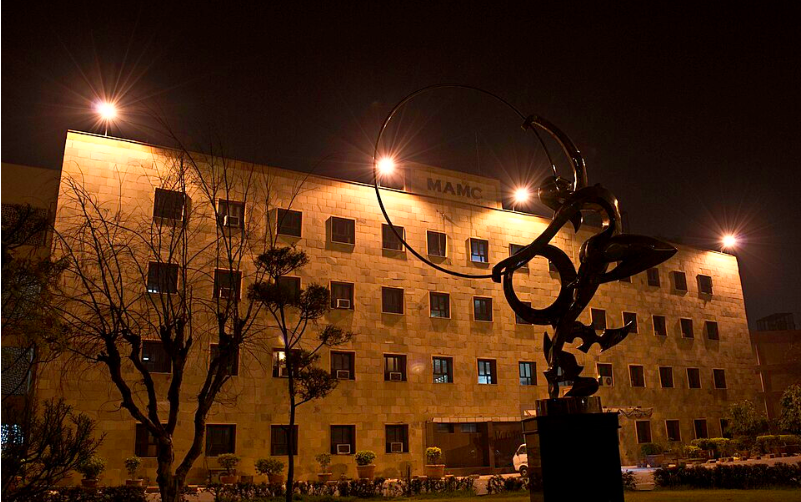
Maulana Azad Medical College, widely known as MAMC, is one of India’s leading government medical colleges and a major centre for medical education, clinical training, and public healthcare in New Delhi. Located at Bahadur Shah Zafar Marg, the college functions under the Government of NCT of Delhi and has grown into one of the most respected medical institutions in the country.
The college is named after Maulana Abul Kalam Azad, India’s first Union Minister of Education and scScientific Research,hose contribution to nation-building, education, and public service made him one of the most influential figures of independent India. MAMC was created in the post-independence period when India was expanding its public medical education system and strengthening healthcare institutions in the national capital.
History and Evolution
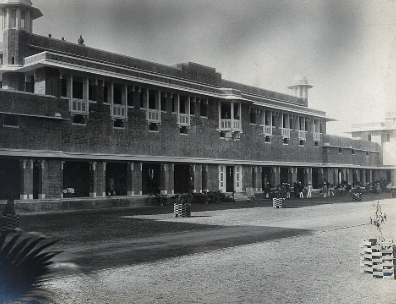
The origins of Maulana Azad Medical College trace back to 1957, when it began as a Composite Medical College near Irwin Hospital under the Second Five-Year Plan. Initially planned with 50 male and 50 female students, the arrangement faced legal objections from Lady Hardinge Medical College, leading to the female students being shifted to Lady Hardinge and the male students to AIIMS.
After consultations involving Prime Minister Jawaharlal Nehru, the institution was re-established as Maulana Azad Memorial Medical College in honor of Maulana Azad. The word “Memorial” was later dropped, and the college officially opened as Maulana Azad Medical College on 1 August 1958.
Col. B. L. Taneja became the first Principal in April 1958, while Dr. P. Diesh initially oversaw the college. In its early years, MAMC functioned from the three-storey Anatomical Block, which housed the anatomy department, administrative offices, physiology and biochemistry departments, a small lecture theatre, library, and laboratory.
Foundation of the College Building
A major milestone in the history of Maulana Azad Medical College came on 24 October 1959, when the foundation stone of the new college building was laid by Union Home Minister Pandit Govind Ballabh Pant. The building was planned on a 30-acre site that had earlier been occupied by the Delhi Central Jail.
The architectural plan for the college complex was prepared by Shri J. D. Shastri, Senior Architect in the Ministry of Health. The building was expected to be completed in stages with an initial outlay of around Rs. 1 crore. Pandit Jawaharlal Nehru later inaugurated the completed building on 26 February 1961.
Academic Excellence
Maulana Azad Medical College was established to strengthen medical education in Delhi and train skilled doctors for India’s healthcare system. From its early years, it gained a strong reputation for disciplined academics, rigorous medical training, and extensive clinical exposure through its associated hospitals.
The first batch had 60 students, and the college was recognized for postgraduate courses even before its first undergraduate batch graduated, reflecting its early academic credibility.
MAMC offers education across major medical and surgical disciplines, including Anatomy, Physiology, Biochemistry, Community Medicine, Medicine, Surgery, Paediatrics, Pathology, Pharmacology, Microbiology, Psychiatry, Orthopaedics, Radiodiagnosis, Radiotherapy, Dermatology, ENT, Forensic Medicine, and Obstetrics and Gynaecology.
The college provides undergraduate, postgraduate, super-specialty, DNB, IGNOU, and fellowship programmes, making it one of India’s important medical teaching institutions.
Patient Care and Clinical Training
Patient care is central to Maulana Azad Medical College’s identity. Its association with major government hospitals in Delhi gives students strong clinical exposure while enabling the institution to serve a large public patient population from Delhi and nearby regions.
Located in the heart of New Delhi, MAMC provides hospital-based training through direct patient interaction and exposure to diverse medical and surgical cases. Its official website also highlights key academic and support facilities, including departments, student services, hostels, library, sports facilities, administrative units, and notices.
Alongside teaching and healthcare, MAMC supports research through dedicated sections such as the Research Cell, Publications, Research Projects, and Multidisciplinary Research Unit, reflecting its focus on scientific inquiry and institutional development.
| Status | Active |
| Listed On | 19 May 2026 |
| Last Edited | 19 May 2026, at 09:19 |

 Login
Login